APS solar buyback rates explained: what they actually pay for your extra power
APS pays 6.171 cents per kWh for exported solar as of September 2025, down from 12.9 cents in 2017. Here is the full rate history, how the credit is calculated, and what the 10-year lock actually covers.
In this article
- What is the buy back rate for APS?
- Arizona does not have net metering. It has an export rate.
- The rate history: 12.9 cents down to 6.171 cents
- How the credit is actually calculated
- A worked example
- How long does the APS buyback rate stay locked in?
- What about SRP?
- What is changing in 2026
- What to check on your own bill
- Related reading
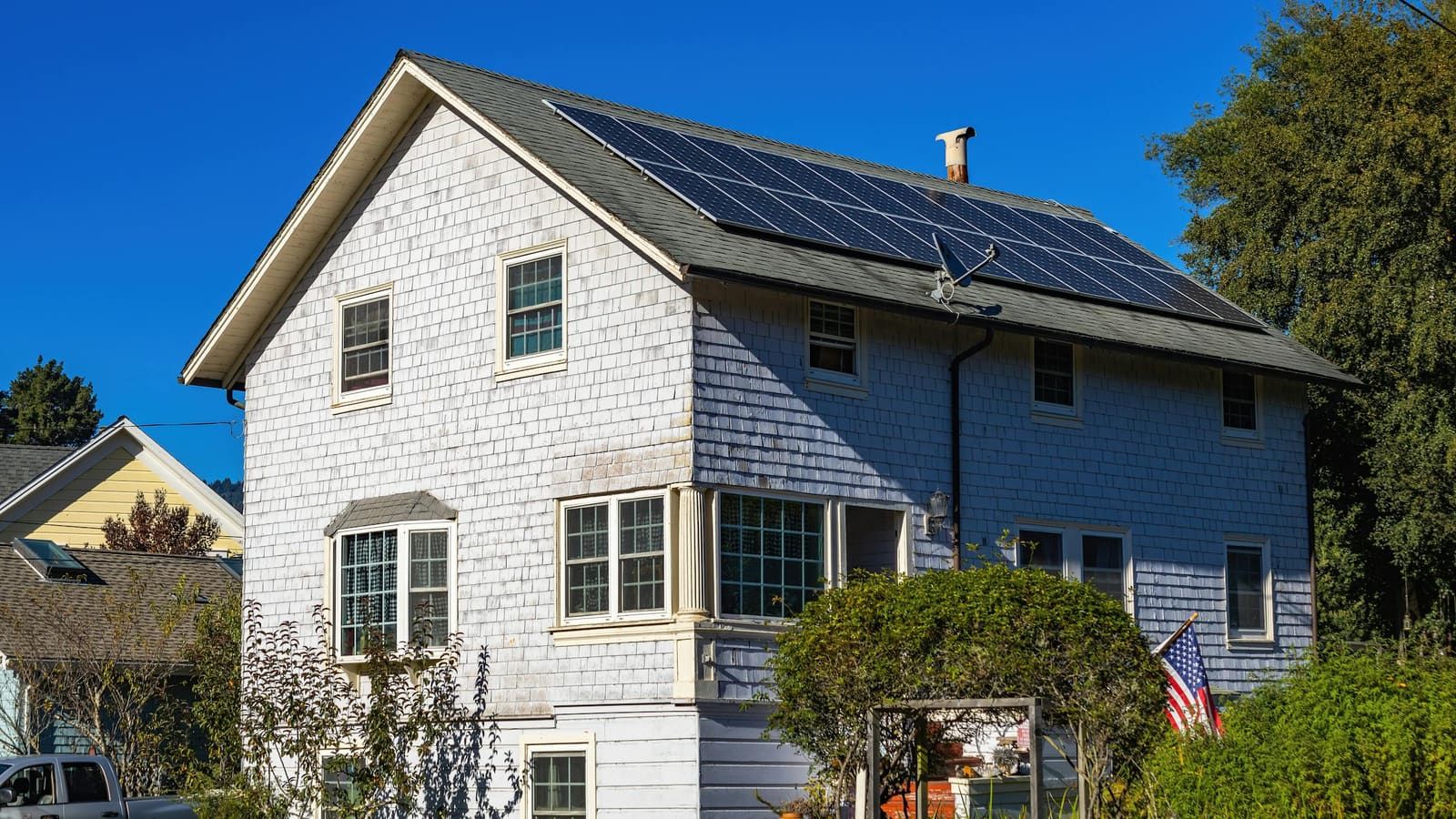
If you put solar on an APS home today, APS pays you 6.171 cents for every kilowatt-hour you export to the grid. That figure comes from Rate Rider RCP, tariff A.C.C. No. 6241, Revision 10, and it holds for anyone who interconnects between September 1, 2025 and August 31, 2026.
Meanwhile, the power you buy back from APS costs several times that. That gap is the single most important number in Arizona residential solar economics, and it is the reason so many people are surprised by their first post-solar bill.
Here is how the rate got where it is, how the credit is actually calculated, and what the widely-repeated “10-year lock” does and does not protect.
6.171¢
APS export credit per kWh, Tranche 2025
Rate Rider RCP, tariff A.C.C. No. 6241 Revision 10, for interconnections between September 1, 2025 and August 31, 2026
Down 52% from 12.9¢ in 2017
What is the buy back rate for APS?
6.171 cents per exported kilowatt-hour, for anyone who interconnects between September 1, 2025 and August 31, 2026. The rate is set by Rate Rider RCP, credited to your bill in dollars rather than kilowatt-hours, and locked for ten years from interconnection. It resets each September 1 for new customers only.
| Question | Answer |
|---|---|
| What does APS pay for exported solar? | $0.06171/kWh (Tranche 2025) |
| How long is that rate good for? | 10 years from interconnection |
| Is it net metering? | No. Arizona ended retail net metering in 2017 |
| Are credits in kWh or dollars? | Dollars |
| Do credits roll over? | Yes, monthly. Excess over $25 is paid out after the December bill |
| When does the rate change? | September 1 each year, for new customers only |
Source for all of the above: APS Rate Rider RCP tariff sheet (opens in a new tab), effective September 1, 2025.
Arizona does not have net metering. It has an export rate.
This trips up almost everyone, including people who have already signed a contract.
What is a solar buy back rate?
It is the price a utility pays you for surplus power you send to the grid, set as a cash rate per kilowatt-hour rather than as a credit against your own consumption. It is deliberately lower than the retail price you pay to buy power back, and in Arizona it is set annually by tariff, not negotiated.
Under traditional retail net metering, your meter effectively spins backward. A kilowatt-hour you export cancels out a kilowatt-hour you later import, one for one, at full retail value. That is not how Arizona works anymore.
In Decision No. 75859, issued January 3, 2017, the Arizona Corporation Commission replaced retail net metering for new solar customers with an export-credit regime. The proceeding was the Commission’s investigation into the value and cost of distributed generation, Docket No. E-00000J-14-0023 (opens in a new tab). Decision 75859 was modified by Decision 75932 later that month and implemented for APS in Decision 76295 in August 2017.
The mechanism that replaced it is the Resource Comparison Proxy, or RCP. Instead of crediting exports at retail, APS credits them at roughly what it would have paid for utility-scale solar. The tariff sets that as a five-year rolling weighted average of grid-scale solar costs, plus a fixed two-cent adder covering avoided transmission capacity, avoided distribution capacity, and line losses.
Customers who interconnected before the change were grandfathered. The ALJ’s order in the docket is explicit that pre-decision customers “will be considered to be fully grandfathered and continue to utilize currently-implemented rate design and net metering.”
Everyone since then is on RCP. Arizona net metering and net billing covers how this export-credit regime compares with the old-style net metering still available in some other states.
The rate history: 12.9 cents down to 6.171 cents
APS publishes every tranche on the tariff sheet. This is the whole history in one table.
| Tranche | Applies to interconnections during | Export rate | Change |
|---|---|---|---|
| 2017 | Sep 1, 2017 to Sep 30, 2018 | $0.12900 | Starting rate |
| 2018 | Oct 1, 2018 to Sep 30, 2019 | $0.11610 | -10.0% |
| 2019 and 2020 | Oct 1, 2019 to Sep 30, 2021 | $0.10450 | -10.0% |
| 2021 | Oct 1, 2021 to Aug 31, 2022 | $0.09405 | -10.0% |
| 2022 | Sep 1, 2022 to Aug 31, 2023 | $0.08465 | -10.0% |
| 2023 | Sep 1, 2023 to Aug 31, 2024 | $0.07619 | -10.0% |
| 2024 | Sep 1, 2024 to Aug 31, 2025 | $0.06857 | -10.0% |
| 2025 | Sep 1, 2025 to Aug 31, 2026 | $0.06171 | -10.0% |
Look at the right-hand column. Every single step has been exactly 10 percent.
APS export rate by tranche, 2017 to 2025
The RCP export credit paid for surplus residential solar, in cents per kWh, for each annual tranche since the rate replaced retail net metering. Each step down is exactly 10 percent.
View the numbers as a table
| Period | RCP export rate (¢) |
|---|---|
| 2017 | 12.9¢ |
| 2018 | 11.61¢ |
| 2019-20 | 10.45¢ |
| 2021 | 9.405¢ |
| 2022 | 8.465¢ |
| 2023 | 7.619¢ |
| 2024 | 6.857¢ |
| 2025 | 6.171¢ |
Source: APS Rate Rider RCP tariff sheet, tariff A.C.C. No. 6241 Revision 10, effective September 1, 2025. Tranche years label the interconnection window, not the calendar year.
Why every step has been exactly 10 percent
That is not a coincidence, and it tells you something. The tariff contains a floor: “The RCP rate may not be reduced by more than 10% each year.” In eight years the calculated rate has apparently come in below the cap every time, so the cap, rather than the underlying calculation, has set the rate. The 10 percent guardrail intended to soften the decline has instead become the decline.
Cumulatively, the export rate is down 52 percent since 2017.
The Tranche 2026 rate, which would take effect September 1, 2026, is not on the posted tariff yet. If the pattern holds it lands near 5.55 cents, but that is arithmetic on a trend, not a published figure, and it should not be treated as one.
How the credit is actually calculated
Three details in the tariff change the math more than most people expect.
Metering is instantaneous, not monthly
The tariff says APS “will meter this Export Energy on an instantaneous basis.” Your solar output first serves whatever your house is drawing at that exact moment. Only the surplus above your instantaneous load counts as an export. If your air conditioner cycles on at 1 p.m., that consumption is netted against production in real time and never becomes an exportable kilowatt-hour.
This is strictly better for you than exporting. Self-consumed solar offsets power you would have bought at retail. Exported solar earns 6.171 cents. Every kilowatt-hour you can shift into your own house instead of onto the grid is worth the difference.
Credits are dollars, not kilowatt-hours
APS applies the rate to your exported kWh and posts a monetary bill credit. That credit cannot be “used up” later at a different retail price, because it was never a kWh balance in the first place.
Rollover and the December payout
Excess credit carries to the next month’s bill. After the December bill, if the remaining balance exceeds $25, APS issues a check automatically. Below $25 it carries into the new year.
Why is my APS bill still high with solar panels?
Because the export credit is the only thing solar changes. The tariff is blunt about it: “All terms and charges in the Customer’s retail rate schedule continue to apply.” Your daily service charge, your Grid Access Charge, your demand charge if you are on a demand plan, and your on-peak energy pricing all survive a perfect solar month untouched.
A worked example
Assumptions, all clearly labeled as illustrative rather than measured:
- A home producing 10,000 kWh of solar in a year
- 55 percent self-consumed, 45 percent exported
- Retail energy value of self-consumed power assumed at 15 cents/kWh
The export half:
4,500 kWh exported x $0.06171 = $277.70 in bill creditThe self-consumed half:
5,500 kWh self-consumed x $0.15 avoided = $825.00 not spentTotal annual value: about $1,103, of which only a quarter comes from exports.
Illustrative annual value of 10,000 kWh of solar, by where the power goes
Illustrative, not measured. Assumes a 55/45 split between self-consumed and exported production, and a 15 cent per kWh retail value for the power you do not have to buy. Change either assumption and the totals move.
View the numbers as a table
| Where the kilowatt-hours go | Value ( USD) |
|---|---|
| Self-consumed (5,500 kWh at 15¢ avoided) | 825 USD |
| Exported (4,500 kWh at 6.171¢ credited) | 277.7 USD |
Export rate from the APS Rate Rider RCP tariff sheet effective September 1, 2025. The 10,000 kWh production figure, the 55/45 split and the 15 cent retail value are illustrative assumptions stated above, not measured figures.
Run the same 10,000 kWh at the 2017 rate of 12.9 cents and the export half alone is $580.50. Same panels, same sun, $303 less per year in export value than an identical system interconnected in 2017.
Change the assumptions and the answer moves. The point of the example is not the total. It is the ratio: self-consumption is worth roughly 2.4 times what exporting is worth at current rates, which is why battery storage and load shifting have become a much bigger part of the Arizona conversation than they were a decade ago.
How long does the APS buyback rate stay locked in?
Ten years from the date of interconnection, after which you move to whatever rate is current then. So a 2017 customer at 12.9 cents rolls off in 2027. The lock is not automatic on signature, and three tariff conditions can end it early.
The tariff states: “Each Customer’s initial RCP rate will be applicable for 10 years from the time of their interconnection.” After that, “the bill credit will be based on the purchase rate in effect at that time, and may change from year to year.”
So a 2017 customer at 12.9 cents rolls off that rate in 2027 and moves to whatever the then-current tranche pays. That is a real cliff and it is arriving soon for the earliest RCP cohort.
Locking the rate is not automatic on signature. Three tariff conditions govern it:
-
The 180-day rule. Your rate is set by the RCP in effect when you submit your interconnection application, but only if you complete installation and get approval from the authority having jurisdiction within 180 days. If a third party or APS causes the delay through no fault of the customer or the installing contractor, the tariff allows 270 days.
-
Material capacity increases void the lock. Adding capacity ends the 10-year lock. The tariff defines material as “increasing the capacity by 10% or 1 kW-ac, whichever is greater.” Adding a few panels later can therefore move your whole system to the current-year rate.
-
Moving the system voids the lock. Relocating the array to another site drops you to the annual rate as it changes year to year.
What about SRP?
SRP is a different animal, and comparing the two on headline export rates alone will mislead you.
SRP is not a Commission-regulated investor-owned utility. It is, per SRP’s own governance page (opens in a new tab), “an agricultural improvement district and political subdivision of the State of Arizona.” Its board is elected, partly on an acreage-based “one acre, one vote” system. Its rates are set by that board, not by the ACC.
SRP’s solar plans split into two structurally different camps:
| SRP plan | Export treatment | Demand charge |
|---|---|---|
| E-27 Customer Generation | kWh netting at the retail per-kWh price for that plan | Yes, on-peak 30-minute demand |
| E-15 Average Demand | kWh netting | Yes |
| E-13 TOU Export | Fixed 3.45 cents/kWh credit | No |
| E-14 EV Export | Fixed 3.45 cents/kWh, credited instantly | No |
Why the headline comparison misleads
A quick glance says SRP pays 3.45 cents while APS pays 6.171, so APS wins. That reading is wrong, and here is why.
On E-27 and E-15, SRP does not pay a separate export rate at all. It nets your exported kilowatt-hours against your delivered kilowatt-hours at the retail price of the plan. The tariff language on E-27: if the net is negative, “SRP will credit customer for the net kWh at the retail per-kWh price under this price plan.” That is closer to old-style net metering than to what APS does.
The demand charge is the catch
The catch on those plans is the demand charge. E-27 bills on “the maximum thirty-minute integrated kW demand occurring during the on-peak periods of the billing cycle.” In July and August, that runs $11.90 for the first 3 kW, $19.97 for the next 7 kW, and $36.05 for every additional kW. One thirty-minute stretch of heavy usage at 4 p.m. in August sets the charge for the entire month, and solar does very little to prevent it if the sun is already dropping.
One more thing E-27 customers should know: SRP’s own tariff says “The E-27 Price Plan will be eliminated as of the November 2029 billing cycle,” with remaining customers moved to E-16.
What is changing in 2026
APS has a general rate case pending at the Corporation Commission, Docket No. E-01345A-25-0105. Per the ACC’s July 10, 2026 case update (opens in a new tab), the evidentiary hearing began May 18, 2026 and closed July 7, 2026 after 31 hearing days. The administrative law judge’s Recommended Opinion and Order is expected in late November 2026, a Commission vote is due by December 31, 2026, and any new rates would take effect in early 2027.
Solar customers have a specific stake in it. APS’s rate case page (opens in a new tab) states that “customers with rooftop solar will see an additional increase,” describing it as a step toward reducing cost-shifting to customers without rooftop solar. The proposal includes an updated Grid Access Charge.
Whether that case also changes the RCP methodology, the 10 percent cap, or the 10-year lock is not stated in the ACC or APS materials currently posted. Anyone telling you they know how it resolves is guessing.
What to check on your own bill
- Find your interconnection date. That sets which tranche you are in and when your 10 years expire.
- Compare your export credit line against your total energy charges. If exports are a small fraction, your economics are driven by self-consumption, not by the buyback rate.
- If you are on SRP E-27 or E-15, look at the demand charge line separately. It is often the largest single item and solar barely touches it.
- Before adding panels to an existing APS system, check the 10 percent / 1 kW-ac threshold. The added production may not be worth resetting your export rate.
Rates in this article were verified against published utility tariffs on August 9, 2026. APS resets the RCP each September 1 and SRP’s board adjusts price plans on its own schedule, so confirm current figures against the linked tariffs before making a decision.
Related reading
- Is solar worth it in Arizona? covers how the export rate feeds into total payback math.
- APS rate plans explained breaks down the retail side of the equation, including which plans solar customers are placed on.
- Arizona solar incentives and tax credits covers the state credit and what changed federally.
- Arizona net metering and net billing explains how the RCP export credit differs from true net metering.
- Solar payback period in Arizona puts the export rate into a full year-by-year payback model.
- APS
- Net Metering
- Solar Basics
- Arizona
More on APS
APS time-of-use rates explained: peak hours, off-peak windows, and what shifting load is worth
APS on-peak is 4pm to 7pm weekdays, year round. Here are the published per-kWh prices for every time period, the twelve off-peak holidays, and the arithmetic on what moving a load is actually worth.
EV charging rate plans in Arizona: APS vs SRP compared
APS still sells a dedicated EV plan with 8.468 cent overnight power. SRP closed its EV plan to new customers with the November 2025 billing cycle and moved its cheapest window to the middle of the day. Here is what that costs.
APS rate plans explained: which one actually fits your home
APS has four residential plans open to new customers as of August 2026. Here are the real rates, the 4pm-7pm peak window, the demand charge math, and the usage profile where each plan wins.