APS Rate Increase: What Arizona Homeowners Need to Know (2026)
APS is asking state regulators for its biggest rate increase in years, about 14%. It is not approved yet. Here is exactly what APS filed, why your bill keeps climbing (data centers are a big part of it), and the one move that takes most of your cost off the utility’s rate sheet for good.
Reviewed May 2026 · Sources cited throughout and listed at the bottom.
The APS rate increase: the bottom line
- APS wants to raise prices about 14%. For a normal home that is about $20 more a month.
- It is not approved yet. The state is still deciding. Nothing has changed on your bill today.
- Big data centers are using most of the new power, and regular homeowners are getting stuck with a lot of the bill.
- Solar locks in your power cost. So a future APS rate hike only hits the small part of power you still buy.
APS rate increase: key facts at a glance
- What APS is asking for
- A base rate increase of about 14% (first asked at 13.99%, raised to 14.75%).
- Typical bill impact
- About $20 more per month for a normal home, if approved.
- The official request
- Filed with the Arizona Corporation Commission (case file E-01345A-25-0105).
- Where it stands
- State meetings to decide began May 18, 2026 (they run about eight weeks).
- Decision and start date
- A state official recommends a decision mid-2026, then the commissioners vote. New rates expected second half of 2026 only if approved.
- How often this happens
- This is APS’s fourth rate increase request since 2017 (after 2017, 2023, and 2024).
- Why bills keep climbing
- Data centers were projected to drive about 94% of new power demand on the APS system from 2023 to 2025.
Status: pending, not approved
APS is seeking a rate increase of about 14%. The Arizona Corporation Commission has not voted. Nothing has changed on your bill yet, and the final figure could be lower if the commission cuts the request.
What APS is asking for
Short answer: APS is asking to raise rates by about 14% (a base increase revised up to roughly 14.75%, which is about $611.3 million a year in extra money APS wants to collect). The official request was filed June 13, 2025. For a normal home, APS estimates that adds roughly $20 a month if approved.
On June 13, 2025, APS asked the Arizona Corporation Commission (the elected group that oversees the power company) to raise rates. The first ask was a base increase of 13.99%. Then on April 3, 2026, APS revised its ask up to 14.75%, which is about $611.3 million a year in extra money APS wants to collect. For homes, the bill would go up about 14.5%, and some news reports cite a figure as high as roughly 16.44%.
For a typical home (about 1,000 kWh a month, which is the power a normal home uses), APS estimates the increase would add roughly $20 a month if it is approved. The state is now holding meetings to decide; they began May 18, 2026 and run about eight weeks. After that, a state official recommends a decision (expected around mid-2026), and then the elected commissioners vote. New rates are expected in the second half of 2026 only if the request is approved.
The increase is not going unchallenged. Arizona Attorney General Kris Mayes and many residents have publicly opposed the roughly 14% hike.
| What it is | APS 2025-26 base rate case (pending, not approved) |
|---|---|
| Filed | June 13, 2025 |
| ACC docket | E-01345A-25-0105 |
| Amount requested | About 14% base increase ($611.3M a year in extra money APS wants to collect), revised up from 13.99% ($579.52M) |
| How much more homes pay | About 14.5% (some news reports cite up to 16.44%) |
| Typical bill change | About $20 more per month for a normal home, if approved |
| Hearing | State meetings to decide began May 18, 2026 (about 8 weeks) |
| Decision | A state official recommends a decision mid-2026, then commissioners vote |
| New rates | Expected second half of 2026 if approved |
Source: APS 2025-26 rate case, ACC Docket E-01345A-25-0105. APS rate case page · Arizona Corporation Commission.
Why your bill keeps climbing: the data center boom
Short answer: Arizona’s electricity demand grew about 8% in 2025, roughly four times the national rate, and data centers were projected to account for about 94% of all growth in demand on the APS system between 2023 and 2025. Building the grid to serve that load costs money, and much of that cost has been landing on residential bills.
Here is the part that does not make the headline number. Arizona’s electricity demand grew about 8% in 2025, roughly four times the national rate. Almost all of that growth came from one place. Data centers were projected to account for about 94% of all growth in energy demand on the APS system between 2023 and 2025.
Your home’s usage barely moved. The grid’s demand exploded, mostly from data centers.
Share of APS demand growth, 2023–2025. Data centers 94%; everything else 6%.
Change in usage over the same window: residential roughly flat, commercial (largely data centers) +17.4%.
| Source of APS demand growth (2023–2025) | Share |
|---|---|
| Data centers | 94% |
| Everything else | 6% |
| Customer class | Usage change |
|---|---|
| Residential | Roughly flat |
| Commercial (largely data centers) | About +17.4% |
The bottom line: data centers, not homes, are using almost all of the new power.
The scale is hard to picture. APS has roughly 30,000 MW of data-center requests in its queue, against a current system peak of about 8,200 MW. A single average request is around 500 MW, enough power for about 375,000 homes. APS expects its peak load to jump about 40% by 2031.
The queue of data-center requests (30,000 MW) is roughly 3.7× the entire current APS system peak (8,200 MW). One average request alone is about 500 MW, enough power for around 375,000 homes.
| Measure | Megawatts (MW) |
|---|---|
| APS current system peak | 8,200 MW |
| Data-center requests in queue | 30,000 MW |
| One average data-center request | 500 MW (about 375,000 homes) |
The bottom line: the new power that data centers are asking for dwarfs what the whole system uses today.
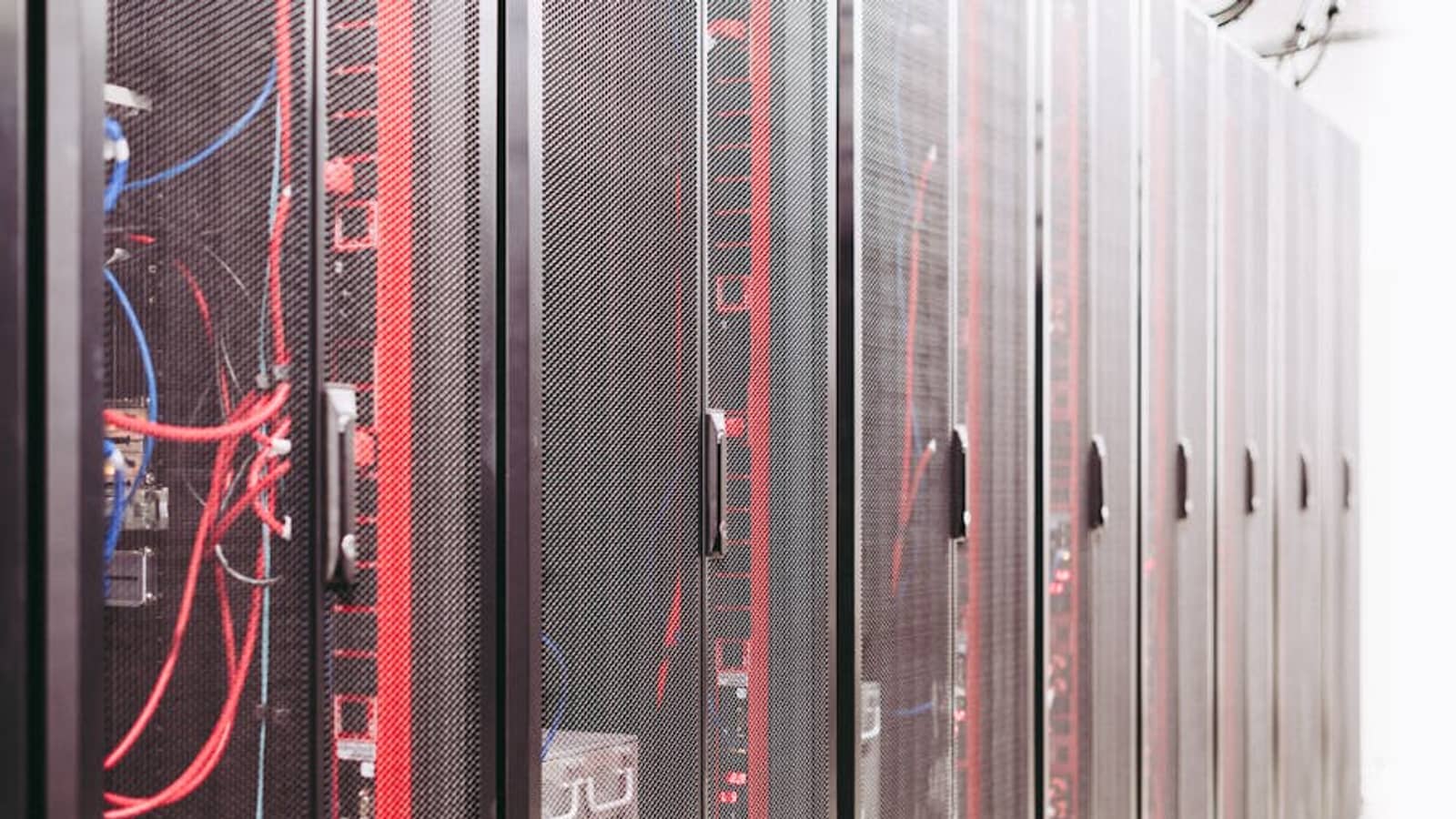
Meanwhile, the average Arizona household is not using more power. Residential usage has stayed relatively flat, while commercial consumption, largely data centers, surged about 17.4%. Building the grid to serve that growth costs money, and a lot of that cost has been landing on residential ratepayers.
To be clear about what this is and is not: this is not a claim that anyone is hiding a conspiracy. It is a live, contested policy question being fought out at the Corporation Commission right now, who should pay for the infrastructure that giant new users need. Should large loads like data centers shoulder more of the cost, or should it be spread across residential bills? The ACC held a large-load and data-center workshop in April 2026 to wrestle with exactly that.
You cannot control how that fight turns out. But you can control how much of your own power you buy from the rate sheet at all. That is the whole point of going solar: it takes a large part of your usage off the utility’s books, no matter which way the policy lands.
The bottom line: Big data centers are using most of the new power, and regular homeowners are getting stuck with a lot of the bill. You cannot stop that. But you can stop buying so much power from APS in the first place, which is exactly what solar does.
Why APS keeps asking for more
Here is the part most people do not know. By law, APS earns a guaranteed profit on the equipment and wires it builds. The more it spends on new equipment, the more money it is allowed to charge you. That is a big reason these requests keep coming.
This is not a secret or a scam. It is just how a regulated power company works. The state sets a fixed rate of return (the guaranteed profit) on what the utility builds, so building more, like the grid to serve all those data centers, means the company is allowed to collect more from customers. That is why a wave of new spending tends to bring a wave of new rate requests right behind it.
Sources: Arizona Capitol Times, “Who pays for Arizona’s AI power boom?” · Utility Dive on data-center load and residential cost · ACC large-load / data-center workshop · APS, “Powering Arizona’s Remarkable Growth”.
APS rate history: this is the fourth ask since 2017
The pending case is not a one-off. It is APS’s fourth rate increase request since 2017, following filings in 2017, 2023, and 2024. The most recent approved one is worth a close look, because it shows the pattern.
In February 2024, the Corporation Commission approved an increase of about 8% for APS, effective around March 8, 2024. For a home using about 1,050 kWh a month, that worked out to roughly $10.50 more per month. Stack the approved increases together (2017, 2023, and 2024), and the average APS customer now pays roughly $49 a month more than they did eight years ago, before the current 14% request is even decided.
| Year | Status | What happened |
|---|---|---|
| 2017 | Approved | Prior approved increase (one of three that built the $49/mo cumulative rise). |
| 2023 | Approved | Prior approved increase contributing to the cumulative rise. |
| 2024 | Approved | 8% increase, effective around March 8, 2024. About $10.50/mo more for a 1,050 kWh home. |
| 2025-26 | Pending | About 14% requested (the official request, case file E-01345A-25-0105). State meetings to decide began May 18, 2026. Awaiting the commission vote. |
Sources: Arizona Corporation Commission rate-case records · APS rate case page.
Stacked together, the approved 2017, 2023 and 2024 increases mean the average APS customer now pays about $49/month more than eight years ago, before the pending 14% request is even decided.
| Year | Status | Detail |
|---|---|---|
| 2017 | Approved | Prior approved increase contributing to the cumulative rise |
| 2023 | Approved | Prior approved increase contributing to the cumulative rise |
| 2024 | Approved | About 8%, roughly $10.50 a month for a 1,050 kWh home |
| 2025–26 | Pending (proposed, not approved) | About 14% requested, roughly $20 a month if approved |
| Cumulative | Approved increases | Average APS customer pays about $49 a month more than 8 years ago |
The bottom line: your bill keeps climbing. Solar holds your own power cost steady.
What it means for your bill
Short answer: If the APS increase is approved, a home using about 1,000 kWh a month would pay roughly $20 more per month. That is an illustrative estimate, not a guarantee: your actual change depends on your usage and rate plan, and rate increases compound on top of the ones already on your bill.
Take the numbers at face value. If the 14% request is approved, a home using about 1,000 kWh a month would pay roughly $20 more per month. That is an estimate, not a promise: your bill depends on your usage, your rate plan, and the final figure the commission lands on. Use it as a range, not a guarantee.
The harder truth is that a rate increase does not happen once. It compounds. The 2024 increase is still on your bill. This one, if approved, stacks on top. And the data-center growth driving it is not slowing down. Here is what power costs a home like yours today, and why solar caps it.
A home about this big in Arizona
What power costs, and what solar saves
Bigger home, more air conditioning, bigger power bill. Here is roughly what a home each size spends on power from APS today, and roughly how much it would save with its own solar.
-
Smaller home
about 1,200 sq ft
$110–$140 a month to APS now
$1,300–$1,700 a year to APS now
With your own solar, save about $1,050–$1,600 a year, on average roughly $90–$135 a month back in your pocket
-
Average home
about 1,800 sq ft
$170–$210 a month to APS now
$2,000–$2,500 a year to APS now
With your own solar, save about $1,550–$2,450 a year, on average roughly $130–$205 a month back in your pocket
-
Bigger home
about 2,800 sq ft
$270–$320 a month to APS now
$3,200–$3,800 a year to APS now
With your own solar, save about $2,400–$3,800 a year, on average roughly $200–$315 a month back in your pocket
These are rough estimates, not a quote. Your real number depends on your home, your AC, your roof, and your rate plan.
Here is why solar saves you money
It comes down to the price of one unit of power (one kilowatt-hour).
about 15.46¢ a unit
It climbs about 5% every year as APS raises rates.
about 11¢ a unit
$0 down, and the price stays the same year after year.
Your solar price is locked. APS keeps climbing. Today the gap is about 4.5¢ a unit, and every year APS goes up, you save more.
Solar locks in most of your power cost, so it stops climbing. The longer you wait, the more APS raises rates, and the more you miss out on.
How we got these: an Arizona home uses about 0.68 kilowatt-hours per square foot each month (higher than the national average because of air conditioning), at the APS average rate of 15.46 cents per kilowatt-hour, which climbs about 5% a year as rates rise. For a roughly 2,000 sq ft home that lands near the Arizona average of about 1,422 kWh and about $164 a month; summer bills run higher, often $200 to $250. The solar savings are figured the same way our savings calculator figures them: solar covers about 92% of your power at a locked rate of about 11 cents a unit with $0 down (about 7 cents if you pay cash), while APS keeps rising. The savings shown are an average per year over 25 years, so they start smaller and grow as APS climbs. These are rough estimates, not a quote. Your exact cost and savings come from the free savings review. Sources are listed on this page.
The bottom line: a bigger home pays more, and every APS increase pushes that number higher. Solar locks most of it in.
When you own a solar system, the electricity it makes costs you the same every year. An APS increase only touches the power you still buy at night or on cloudy days, which is a much smaller number once your roof carries most of your daytime load. Pair panels with a battery and you lean on the grid even less, so the next APS rate case barely moves your bill.
Want to see the shape of the numbers for your home? Estimate my savings
Cities APS serves in Arizona
APS provides power to much of metro Phoenix and the West Valley. If you live in one of these cities, the APS rate increase on this page is your rate increase, and we size solar and compare licensed installer quotes in your area. Tap your city to see how solar looks where you live.
Not sure which utility you have? We will check when we run your free savings review. Estimate my savings Book a free review

What you can do about it
Short answer: You cannot change the APS rate case, but you can control how much power you buy from the utility. Rooftop solar, often with $0 down, takes a large share of your usage off the rate sheet, so future increases apply to a much smaller number. A free savings review runs your real numbers and gives an honest answer, even if the answer is no.
You cannot vote in the APS rate case. You cannot control how the Corporation Commission settles the data-center fight. But you do control one big lever: how much power you buy from the utility in the first place.
Rooftop solar, often with $0 down, takes a large share of your usage off the rate sheet. The power your panels produce is not subject to the next increase, or the one after that. Instead of being fully exposed to a rate you do not control, you fix most of your cost up front.
We are not going to oversell it. Solar does not fit every roof or every bill. If your roof, shade, or usage means it does not pencil out, we will tell you that to your face. The free review is exactly that: we run your real numbers, on your actual APS bill, and give you an honest answer.
APS rate increase: common questions
Is the APS rate increase approved yet?
No. As of May 2026 the APS rate increase is not approved. APS asked for it in June 2025. The state is now holding meetings to decide (the formal hearing began May 18, 2026 at the Arizona Corporation Commission). After those meetings a state official will recommend a decision around mid-2026, and then the elected commissioners vote. Until that vote, nothing has changed on your bill.
How much is the APS rate increase?
APS is asking to raise rates about 14% (a base increase of about 14.75%, revised up from 13.99%). That is extra money APS wants to collect, about $611.3 million a year. For homes, the bill would go up about 14.5%. The official request is still pending, so the final figure could be lower if the commission cuts it.
How much will my APS bill go up?
About $20 more per month for a typical home, if the increase is approved. That is the power you use in a normal month (about 1,000 kWh). In percent it is a base increase of about 14.75%, with about 14.5% landing on homes. Your real change depends on how much power you use and your rate plan, and the final number could be lower if the Arizona Corporation Commission cuts the request.
When will APS rates go up?
Not yet, and only if the increase is approved. The state is holding meetings to decide; they began May 18, 2026 and run about eight weeks. A state official then recommends a decision around mid-2026, and the elected commissioners vote after that. If approved, new APS rates are expected in the second half of 2026. The increase could also be reduced or denied.
Why are data centers raising my bill?
Because they are using almost all of the new power in Arizona, and building the grid (the power company’s system) to serve them costs money. Arizona power use grew about 8% in 2025, roughly four times the national rate, and data centers were projected to cause about 94% of all that growth on the APS system between 2023 and 2025. There is an active fight at the Corporation Commission over whether big users like data centers should pay more of that cost instead of pushing it onto homeowners. Home power use stayed about flat while business use jumped about 17.4%, so the bill has been landing on regular families.
Can solar protect me from APS rate hikes?
It can cap a large part of your exposure. The power your panels produce costs the same every year, so an APS rate increase only applies to the electricity you still buy from the grid. Once your roof covers most of your daytime usage, a rate hike moves a much smaller number. We will run your real numbers and tell you honestly if solar does not fit your home.
When does the new APS rate take effect?
If the Arizona Corporation Commission approves it, new APS rates are expected in the second half of 2026, after a state official recommends a decision and the commissioners vote. The exact date depends on the commission’s timeline, and the increase could be reduced or denied.
Sources
- APS, Regulatory and Legal: Rate case (ACC Docket E-01345A-25-0105).
- Arizona Corporation Commission (rate-case authority and docket records).
- Arizona Capitol Times, “Who pays for Arizona’s AI power boom?” (March 10, 2026)
- Utility Dive: data-center load growth and residential cost risk
- ACC large-load / data-center workshop highlights (April 2026)
- APS, “Powering Arizona’s Remarkable Growth”
Figures reflect the rate case as of May 2026. The 2025-26 increase is pending and could be changed or denied by the Arizona Corporation Commission. Bill-impact figures are illustrative estimates for the usage levels noted and are not a guarantee for any individual home.
See what the APS increase costs your home.
Bring a recent APS bill. We will run your real numbers and tell you honestly what solar would do for it, even if the answer is no. No pressure, no hard sell.