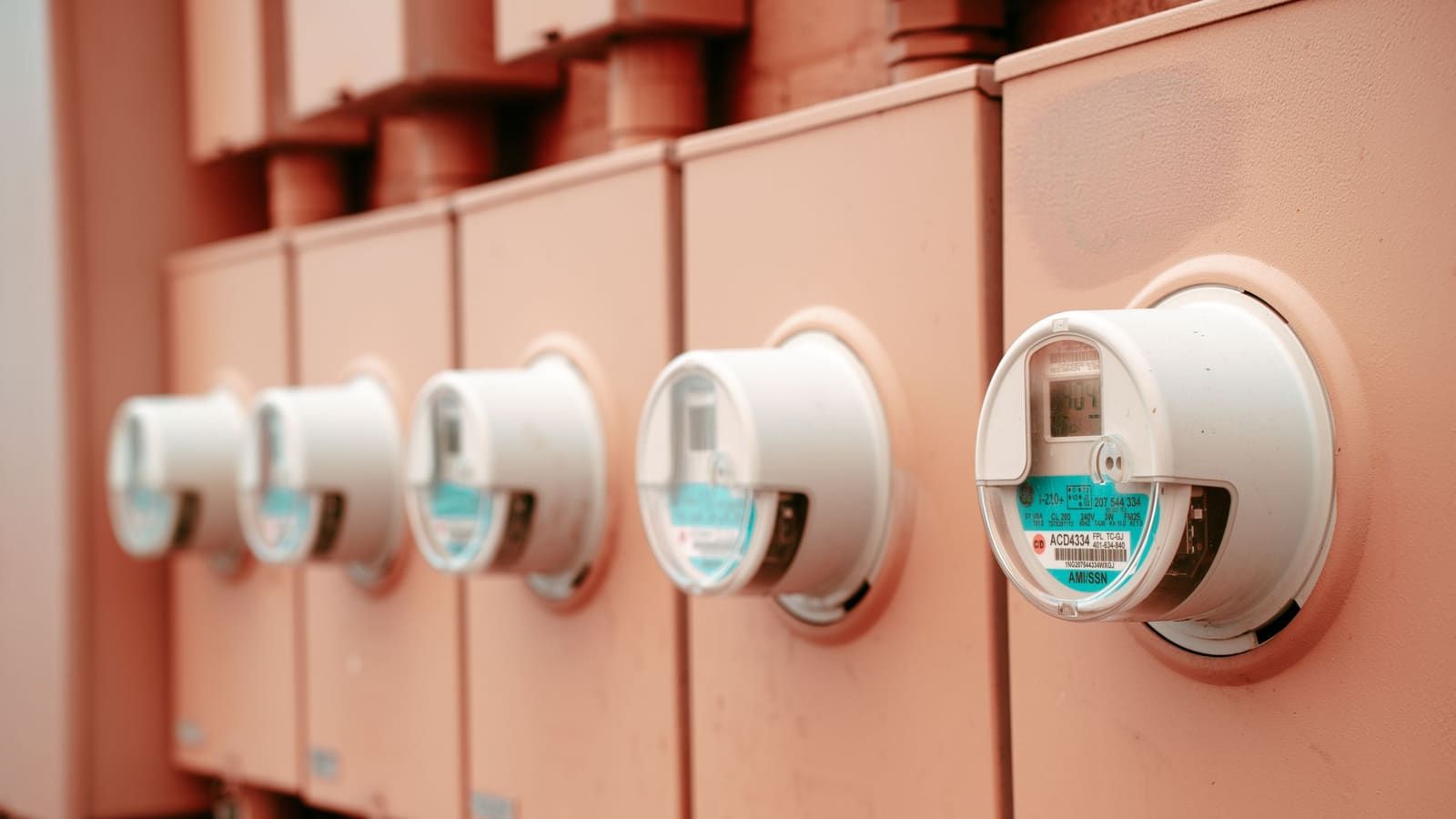
Short answer: Arizona electricity demand is growing about four times the national rate, driven by a wave of new data centers across metro Phoenix. To keep up, APS, SRP, and TEP are spending billions on the grid and recovering it through rate cases, which is why residential bills keep climbing. The one cost you control is how much power you buy from the utility.
Arizona's power demand is growing fast
Start with the demand. Arizona's electricity use grew about 8% in 2025, roughly four times the national rate, according to reporting on the APS system. All three big utilities set new all-time peak-demand records in August 2025: APS hit 8,631 MW, SRP hit 8,542 MW, and TEP hit 2,502 MW, per Utility Dive. When demand jumps like that, the utility has to build, and building is expensive.
The data-center boom is the big driver
Metro Phoenix now hosts about 707 MW of operating data-center capacity, more than any major U.S. metro except Dallas, with roughly 140 facilities running and dozens more on the way (Metro Phoenix Alliance). Microsoft, Google, Meta, Apple, and NTT are all building or expanding here. They came for cheap land, low disaster risk, tax incentives, established fiber, and power that used to be cheap.
The scale is hard to overstate. APS has said that if every data center asking for service got it, demand would be around 19,000 MW, and that it does not have the infrastructure to serve all of it, so it has turned customers away (azfamily). These facilities run servers around the clock, so they pull power day and night, not just at peak.
How that reaches your bill
Building generation and transmission to keep up costs money, and utilities recover that money through rate cases at the Arizona Corporation Commission. Two recent moves matter for homeowners:
APS filed for a net 13.99% rate increase with the ACC on June 13, 2025, which would add about $20 a month for a typical 1,000 kWh residential customer (APS, KJZZ). Read that carefully: it is an application, not a done deal. The case is expected to conclude in late 2026, with any change effective in the second half of 2026. Nobody's bill has gone up 14% yet. We walk through the details on our APS rate increase page.
SRP, separately, made rate changes effective in November 2025 that included a sharp increase in the fixed monthly service charge for single-family homes. Our SRP rate increase page covers what that means for SRP customers.
The part that's still being fought over
Here is where honest reporting matters. A 12News data analysis found that from 2022 to 2025, APS residential customers paid far more per unit of new load than the commercial sector, even though commercial use (driven largely by data centers) accounted for most of the growth. That is one outlet's analysis, and the utilities dispute the framing.
APS and SRP both say large loads pay their own way. APS has proposed a separate extra-large-load customer class with much higher rates, explicitly so residential customers are not subsidizing data centers (APS). SRP points to its Large Customer Integration Process and updated E-67 plan, which make big customers cover their own infrastructure (Arizona Capitol Times). The ACC held a large-load workshop in April 2026 to sort out the rules.
So whether the server farms are paying their fair share is genuinely unsettled, and being decided right now at the ACC. What is not in dispute: demand is exploding, the grid needs billions in upgrades, and those costs flow through rate cases.
The one cost you can control
You cannot stop the data centers and you cannot freeze the next rate case. But you can change how much power you buy from the utility. When you own solar, the electricity it makes costs you the same every year, so the rate hikes you cannot control land on a much smaller remaining bill. Arizona's sun makes that math work better here than almost anywhere.
The federal 30% residential credit ended December 31, 2025, so a system bought in 2026 does not earn it. The Arizona state credit, worth up to $1,000, still applies, and $0-down financing is common, which lets many homeowners swap a rising utility bill for a fixed payment. You can get a first look with the savings calculator, and read whether the move pencils out on is solar worth it in Arizona.
Common questions
Why does my APS or SRP bill keep going up?
A few things at once. Arizona electricity demand is growing about four times the national rate, led by a wave of new data centers. APS, SRP, and TEP all set record peak demand in August 2025, and the utilities are spending billions on new generation and transmission to keep up. Those costs show up in rate cases, which is why both APS and SRP have proposed or made changes that push residential bills higher.
How many data centers are in metro Phoenix?
Metro Phoenix has roughly 707 MW of operating data-center capacity, more than any major U.S. metro except Dallas, with around 140 facilities running and dozens more planned. Microsoft, Google, Meta, Apple, NTT, and others are building or expanding here, drawn by cheap land, low natural-disaster risk, tax incentives, and established fiber.
Are the data centers why my specific bill went up?
That is the part being fought out right now. A 12News data analysis found APS residential customers paid far more per unit of new load than the commercial sector did from 2022 to 2025. The utilities dispute that framing and say large loads pay their own way. What is not in dispute: demand is exploding and the grid needs billions in upgrades, and those costs land on rate cases.
What can I actually do about a rising electric bill?
You cannot vote out the data centers or freeze the next rate case. The one lever you control is how much power you buy from the utility. Owning solar fixes the cost of the power you generate, so the rate hikes you cannot control land on a smaller remaining bill. We run your actual numbers in a free review before you commit to anything.
This is a general overview of why Arizona rates are climbing. Your own savings depend on your home, usage, utility, and financing; the free review produces your specific numbers.